
特种化工电气解决方案服务商
Calcium oxide
Calcium oxide
Couldn't load pickup availability
Product Name: Calcium Oxide
Other name: Quicklime
Formula: CaO
Content: > 80%
Packaging: 30kg/bag, 1,000kg/bag
Origin: Vietnam
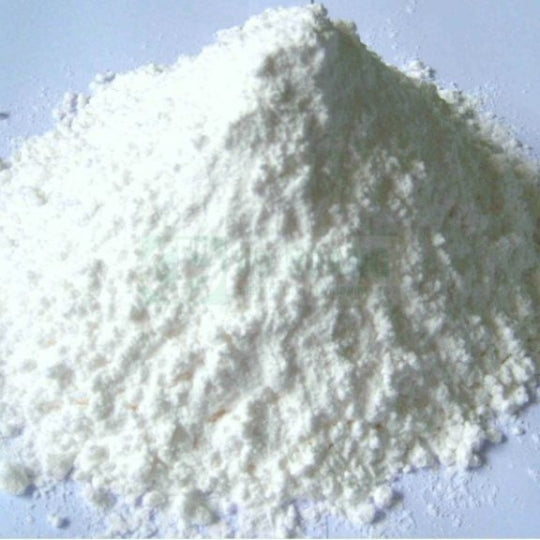
Appearance: White color, fine powder or lump form.
Applications of lime in daily life
1. In the construction industry
This is one of the raw materials in the construction industry. Lime is mixed with cement and water in specific proportions to create mortar for building and plastering. Mortar containing lime has high adhesion when dried due to the loss of water, which causes calcium hydroxide to crystallize; simultaneously, carbon dioxide in the air also causes a carbonation process, creating a mixture with high hardness.
2. In manufacturing industry
Applied in the production of silicate bricks and glass.
Used quicklime to remove impurities in the production of metals and alloys such as steel, magnesium, aluminum, etc.
Acts as a raw material in the production of calcium carbide, soda ash, and bleaching powder.
In the hygiene industry: an effective anti-freezing component.
Used to purify citric acid, glucose, and dyes.
3. In ceramic production
Used as a fluxing agent for medium and high-fire glazes at temperatures of 1100°C, helping the resulting product achieve higher hardness, better scratch resistance, glaze color retention, and acid resistance.
Helps reduce viscosity in glazes with high silica content.
4. In wastewater treatment
Quicklime is used in water and wastewater treatment to reduce acidity or help remove impurities such as phosphate and others.
Applied in pollution control: used in scrubbers to remove sulfur-based exhaust gases and treat certain liquids.
5. In laboratory settings
Quicklime is used as an analytical reagent, CO2 absorbent, spectral analytical reagent, and high-purity reagent for epitaxial and diffusion processes in semiconductor manufacturing, as well as for drying ammonia and dehydration in the laboratory.
6. Other applications
Limewater can be used to soak ingredients such as winter melon, carrots, coconut, etc., in jam processing.
In aquaculture: acts to neutralize acidity (alum), disinfect, kill fungi, detoxify the environment, reduce pH levels, and improve soil.
Due to its strong hygroscopic properties, calcium oxide is also used to dry many substances.
Notes on storage and use of quicklime
To prevent lime from reacting with water vapor in the air, which reduces its quality, lump lime should not be stored for long. It should be slaked as soon as possible or ground into a fine powder and stored in sealed bags.
Slaked lime should be submerged in pits with a layer of sand or water 10 to 20 cm thick on top to limit the contact between the lime and carbon dioxide in the air.
Lime that has turned into calcium carbonate (stony lime) will have reduced quality and plasticity, thereby decreasing its adhesive ability, so proper storage is required.
Distinguishing between quicklime, slaked lime, and limestone
As we have partially understood what quicklime is above, what are slaked lime and limestone, and how do they differ from quicklime?
Quicklime is a chemical compound with the formula CaO and is a white solid. When it reacts with water, it produces Ca(OH)2.
Slaked lime, or Calcium hydroxide, is a chemical compound with the formula Ca(OH)2. It is a colorless crystalline substance or a white powder. It is the product obtained when calcium oxide reacts with water. Slaked lime is widely applied in various fields of industry such as water treatment, cleaning, construction, fertilizer production, etc.
Limestone is a type of sedimentary rock composed chemically of calcite and aragonite minerals with the chemical formula CaCO3. Limestone is rarely found in pure form and is often mixed with impurities such as shale, silica, igneous rock, clay, mud, etc. It comes in various colors, ranging from white to ash, pale green, yellow, dark pink, or even black.
Share